
🇺🇸 American AI is facing a pricing problem
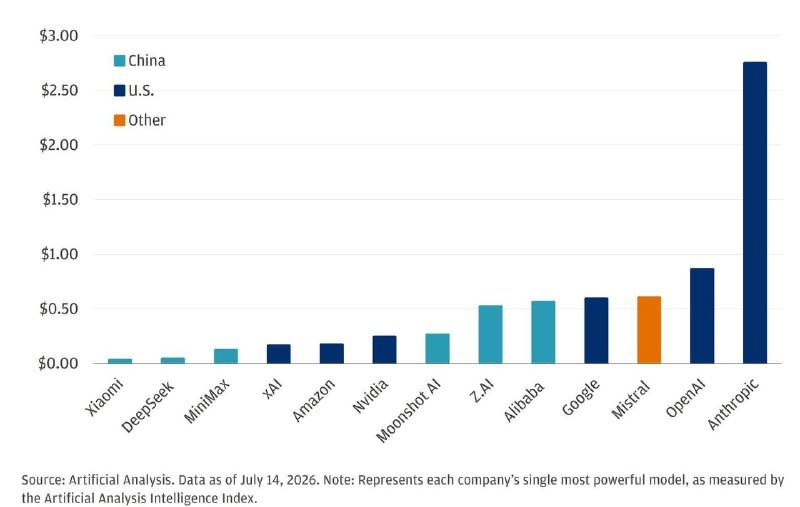
🇺🇸 American AI is facing a pricing problem. For years, the best AI models came from U.S. companies and customers paid premium prices for them. Now China is changing the equation. Moonshot AI’s latest Kimi K3 charges just $15 per million output tokens, roughly half the price of OpenAI’s GPT-5.6 Sol. Other leading Chinese models are even cheaper, costing just a quarter or less of comparable American models. The cost advantage isn’t the only reason they’re gaining traction. Many Chinese models are released as open-weight models, allowing companies to run them on their own infrastructure, customize them, and keep sensitive data in-house instead of relying on a third-party API. That’s one reason companies such as Airbnb, DoorDash, Siemens, and Microsoft are increasingly exploring Chinese models for workloads where performance is close enough and cost matters more. Investors are paying attention too. Following Kimi K3’s launch, the semiconductor index dropped 1.6%, capping a 10% weekly decline and leaving it about 20% below its June peak. Kimi wasn’t the sole cause, but it reinforced growing concerns that AI models may be becoming commoditized faster than expected. The numbers make the debate even more interesting. The U.S. invested 23× more than China in private AI last year, yet its top models reportedly held only a 2.7% performance lead. Meanwhile, America’s five largest hyperscalers are expected to spend more than $725 billion on AI this year. @aipost 🏴